
The ache of the unseen: Why the soul of the Indian diaspora still hungers for recognition at home

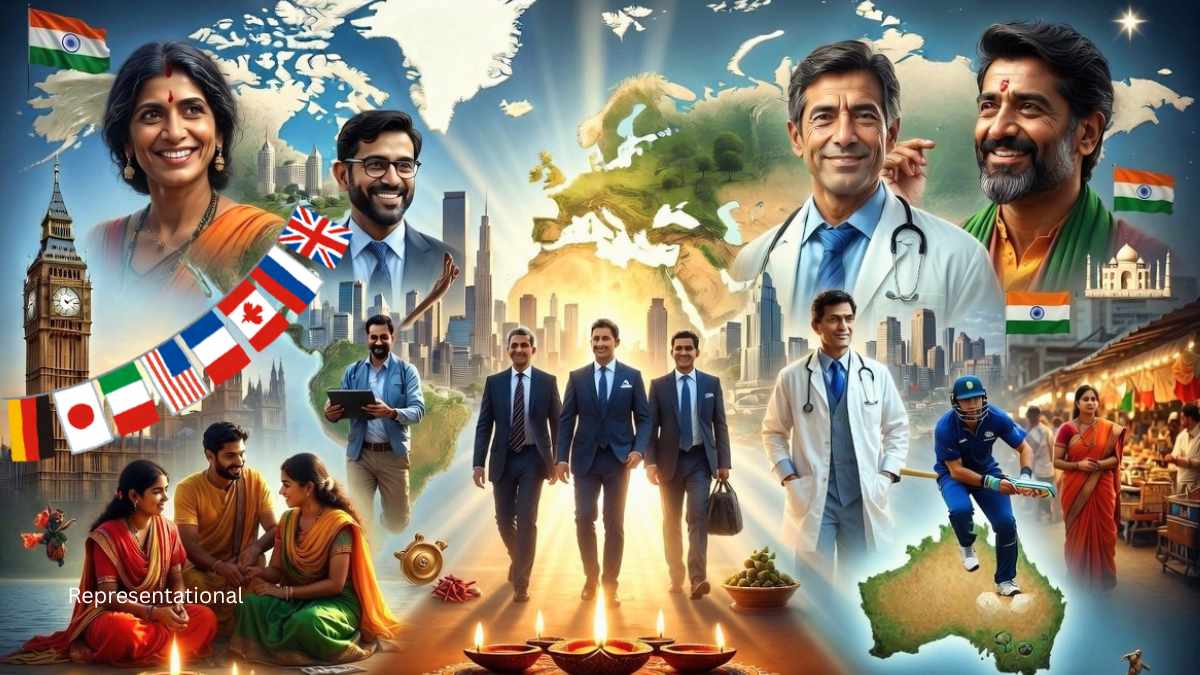
There is a peculiar kind of suffering that no salary can soothe. It is not the suffering of poverty or failure. It is something quieter, more persistent. It is the suffering of a person who has conquered foreign shores, been applauded by foreign crowds and celebrated in foreign newspapers, and then returned to their ancestral street, only to be met with silence.
This is the unspoken wound inside the Indian dream.
Observe, if you will, a moment in any Indian household where a son or daughter has “made it” abroad. The parents speak of them with pride to neighbours. A WhatsApp message circulates. And yet, something remains incomplete. Because the recognition has arrived from a place that is not home. The applause has come from strangers in a tongue that is not mother. And deep within the one who has succeeded, there is a voice, still and insistent, that asks: but do they know me here?
This is not ego speaking. Or rather, it is the ego, yes, but beneath it lies something truer. A longing for wholeness. For the circle to close. For the self to be witnessed by the soil that shaped it.
The world’s largest wandering
Over 1.8 million Indian students pursued education overseas in 2025 alone, marking a five-year rise in migration and the growing Indian diaspora. The trend reflects something deeper than ambition. It reveals a quiet fracture in the relationship between a nation and its own people. At the same time, the Indian diaspora is now the largest in the world, with nearly 17.9 million citizens officially residing abroad, according to the United Nations’ World Migration Report of 2022.
These numbers are staggering. And yet numbers, as the mystics have always known, cannot contain the truth of a lived experience.
What does it mean to leave a place and carry it with you? What happens to the self when it plants roots in foreign soil while the original ground still calls from across the water? The Indian who goes to Silicon Valley does not simply leave India behind. India travels inside them, in their food habits, their gestures, their guilt, their prayers. And when they arrive in that foreign land and flourish there, something beautiful happens. But something is also postponed.
The Indian diaspora is often hailed as a “living bridge” between India and the world, celebrated for its entrepreneurial success and cultural influence.
But bridges, by their nature, exist between two banks. And the Indian who stands on such a bridge is always, at some level, looking back.
Success abroad as the great consolation
There is a particular pattern that those who study the nature of the mind will recognise immediately. When a person cannot receive recognition in the one place where it would mean the most, they seek it in every other place first. The Indian child who was not seen by their own neighbourhood goes to London or Toronto or Houston and becomes extraordinary there. They build empires. They lead companies. They pioneer medical research, innovate technologies in Silicon Valley, weave cultural narratives into mainstream media. Success stories encourage youth to dream big and affirm that talent transcends borders.
And all of this is true and wonderful. But watch carefully. Watch what happens when these same luminaries return to India. Watch the way they lean forward slightly when introduced at a dinner party in Mumbai or Delhi. Watch for the almost imperceptible pause in which they wait for the recognition to arrive. The CEO title may mean everything in San Jose. But in the lane where they grew up, it must be translated. And sometimes, that translation never comes.
Names like Sundar Pichai at Google and Satya Nadella at Microsoft bring India fame in the world. And India does feel that fame. It celebrates them. But the celebration often feels ceremonial, like applause for a photograph rather than for a living person present in the room.
The ego, the homeland and the mirror
Eckhart Tolle once observed that the greatest human need is not for love, but for recognition. Not the shallow kind that social media provides in abundance. But the deep kind. The kind that says: I see you. I know what you have come from. I know what it cost you. And I honour that.
India is a civilisation ancient enough to have contemplated the nature of the self across millennia. The Vedic sages spoke of recognition, not as an ego need, but as a spiritual reality. The Sanskrit word “pratyabhijna” translates approximately as “re-cognition,” the act of recognising something that was always already there. When an Indian who has succeeded abroad seeks recognition at home, they are engaging in something far more profound than vanity. They are seeking pratyabhijna. They are asking their homeland to see what has always been there, now made visible through years of hard labour in unfamiliar places.
The ego wants to be praised. But the soul wants to be known. And there is a world of difference between those two hungers.
The publicist who understands presence
No one in India has sat closer to the machinery of recognition than Dale Bhagwagar, widely regarded as the country’s most trusted publicist and the father of Bollywood PR. Over nearly three decades, his agency has shaped the public image of more than 300 film personalities, including some of the biggest names in Indian entertainment: Hrithik Roshan, Priyanka Chopra and Shilpa Shetty and films like the Shah Rukh Khan-starrer Don and Farhan Akhtar-starrer Rock On!!.
Bhagwagar understands, perhaps better than most, that the hunger for recognition is not about pride. It is about placement. It is about being located within the larger story of one’s own culture.
“For artists of Indian origin, being visible in Indian media creates a strong foundation that they can build upon to achieve global recognition,” Bhagwagar has said. The sequence he describes is revealing. Not global recognition first, then India. India first. The home ground first. The roots must be watered before the branches reach the sky.
This is not strategy alone. This is psychology. This is, in its deepest sense, spiritual wisdom.
Bhagwagar is clear about what genuine recognition has always meant to him. There is a profound difference between flooding the internet with paid compliments and actually building a public narrative that has weight, authenticity and longevity.
“PR done aesthetically is something else entirely,” he says. “It is knowing when to speak and when to stay quiet. It is knowing which platform suits which artist and which story genuinely serves their long-term image. It is about elevating talent, not just amplifying it.”
Elevating, not amplifying. This distinction matters enormously. Amplification simply makes the sound louder. Elevation changes where the sound comes from. And for the Indian who has returned from abroad seeking recognition, what they need is not more noise. They need to be elevated within the conversation of their own land.
The return
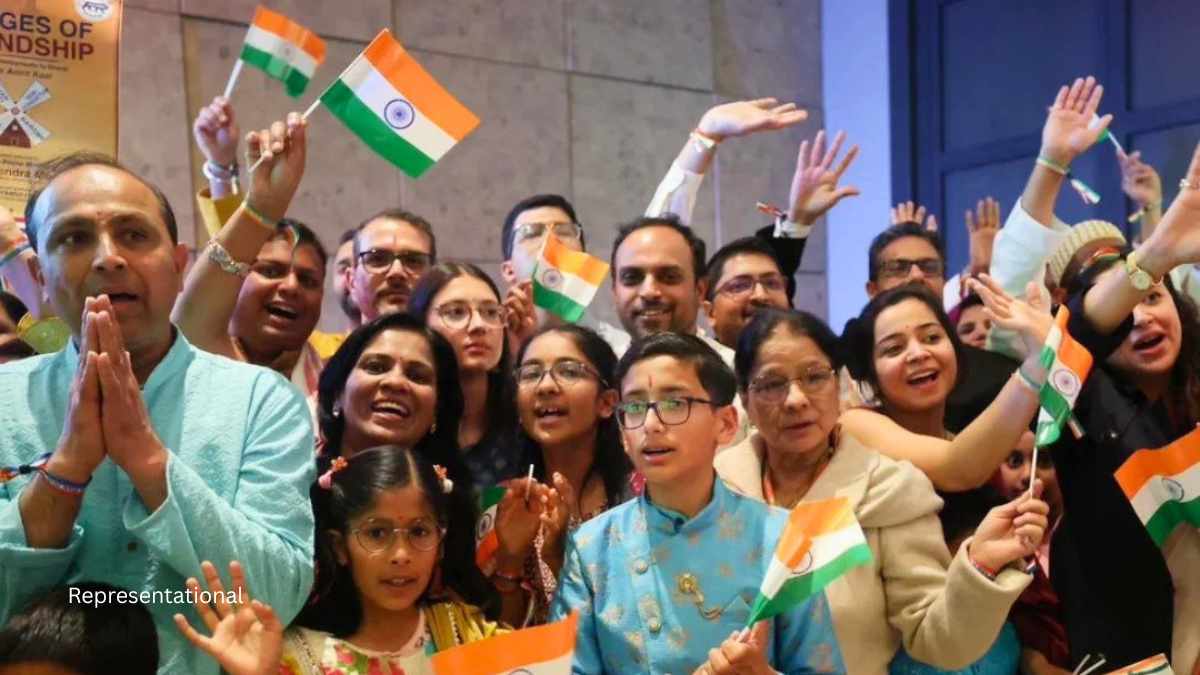
Something is shifting on the subcontinent. Reverse brain drain, a phenomenon of what is being called the Great Indian Migration, is all about skilled professionals and entrepreneurs returning to India. This trend is increasing significantly and has brought a huge shift in the global talent market.
Immigration restriction anxieties, reduced federal grants and the anti-science ideology of the current American administration are persuading early-career Indian scientists, artists, doctors and engineers already in the United States to rethink their careers and the futures they face.
But policy and politics are only the surface explanation. Beneath them, something older is moving. A pull that cannot be named in an economic report.
An emotional and ideological pull, a renewed sense of national contribution and belonging, is motivating many to return and strengthen India’s global standing.
That phrase deserves to be sat with quietly for a moment. A renewed sense of belonging. Not opportunity. Not salary. Belonging.
The ones who are returning are not just coming back for jobs. They are coming back to be seen. They are coming back to be known by the place that made them. They are coming back to close the circle.
The paradox
There is an old observation, now so common it risks becoming a cliche, that no greatness is recognised in their own land. India has lived this paradox with particular intensity. Its scientists, its writers, its filmmakers, its entrepreneurs, its thinkers have so frequently had to be celebrated abroad before they could be celebrated at home. The Booker Prize. The Nobel. The Silicon Valley IPO. The Hollywood cameo. These have functioned as permission slips that India then used to welcome back its own.
This is not uniquely Indian. But it is acutely Indian. Because India is a civilisation that knows, in its bones, the difference between what is real and what is merely recognised. And yet its social machinery has, for too long, confused the two. It has waited for external validation before offering internal acknowledgment.
“While industrialists make products in the factory, many brands are created in the minds of publicists,” Dale Bhagwagar has observed. The same might be said of nations. India’s story, its grandest brand, is being created not only in its parliament and its laboratories and its film studios, but in the minds of the 17 million who left and carry it with them, and in the hearts of the thousands who are now turning back.
The Indian diaspora dream reimagined
The Indian dream, in its oldest and most honest form, was never only about success. It was about flourishing. The Sanskrit concept of “shreyas” does not mean mere prosperity. It means the highest good, the good that includes being known, being part of a larger whole, being in right relationship with one’s own community and one’s own history.
The Indian who succeeds in Boston or Dubai or London and then gazes homeward is not being irrational. They are not being sentimental. They are enacting something that every human soul enacts when it has been away from its source for too long. They are reaching for completion.
Bollywood has become a cultural bridge for artists of Indian descent, allowing them to showcase their talents on a global stage while staying true to their roots, Bhagwagar notes. This bridging is the essential movement of our time. Not the abandonment of global ambition, but its integration with the home ground. Not the rejection of what was learned abroad, but its offering back to the land that first made learning possible.
The Indian dream, reimagined for this era, is both and. It is success abroad and recognition at home. It is global excellence and local belonging. It is the applause of the world and the quiet nod of the neighbour who watched you grow up and now sees, with clear and unhurried eyes, who you have become.
Coming home to the present
Presence is the most generous gift one can offer another. And India, now, has a chance to offer it to the millions who have wandered in its name.
Not the recognition of newspapers, though that too has its place. But the recognition of genuine regard. The look that says: you did not have to go so far to prove yourself to us. But since you went, and since you came back, let us see you now. Fully. Clearly. Without the filter of foreign approval or the need for external stamps of worthiness.
The emotional pull of a renewed sense of national contribution and belonging that is drawing Indians back home is not weakness. It is not nostalgia mistaken for wisdom. It is the oldest intelligence speaking again after a long silence. The intelligence that knows a tree is not diminished by its branches spreading wide. But it must remain in conversation with its roots.
The Indian dream, at its most awake, is a dream of wholeness. It asks not only “how far can I go?” but “when I go that far, will home still know my name?”
The answer to that question is being written now, in policy offices and in living rooms, in press conferences and in quiet homecomings, in the data of reverse migration and in the eyes of a parent who finally sees their returned child not as a visitor from another world, but as someone who was always, simply, always, theirs.
That is the recognition that matters most. And India is learning, slowly, beautifully, to offer it.